



By FocusEconomics
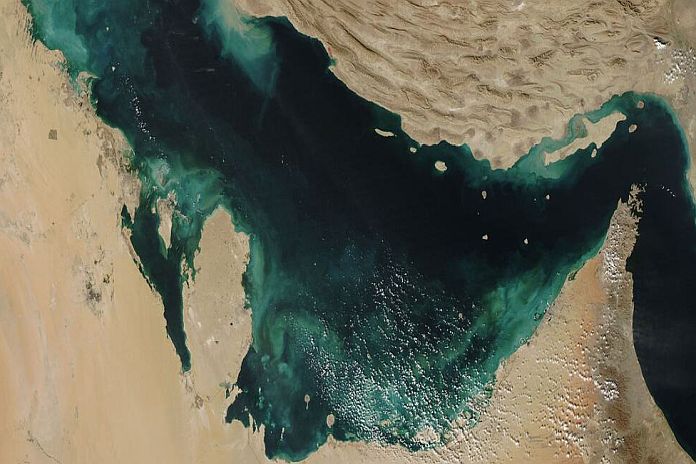
BARCELONA, Spain – Recovery in oil output won’t happen all at once. The recent US-Iran deal commits the two countries to reopen the Strait. That said, this won’t be overnight; the waterway needs to be demined, and the political agreement has to be durable enough for ships to attempt passage.
Assuming this is achieved, many Middle Eastern oil exporters that had throttled down their production due to a lack of domestic storage space should be able to ramp up output and resume shipping crude via Hormuz. However, this ramp-up won’t be instant either, and is likely to be further delayed by damage to some regional energy facilities sustained from Iranian drone and missile attacks.
Geopolitical outlook remains murky
Iran has floated the idea of charging for using the waterway after 60 days, while President Trump has threatened to reinitiate strikes on Iran if the deal flounders. Moreover, Israel remains a wild card; with the country’s leaders purportedly unhappy with the terms of the deal, renewed Israel-Iran fighting can’t be ruled out.
Panelists’ price outlook sees large divergence
As a result of such uncertainty on multiple fronts, it is no surprise that our panelists see wildly different oil prices for the coming quarters, with maximum forecasts of over USD 100 per barrel for later this year and minimums of less than USD 60. Overall, the Consensus of the dozens of panelists we poll is for crude prices to gradually decline in the coming quarters. Along with the reopening of the Hormuz Strait, higher OPEC+ quotas and stronger production from the UAE, US and Venezuela will boost supply and weigh on prices in turn. The International Energy Agency recently projected that global oil output could rise by 8 million barrels per day in 2027, leading to a market surplus of 5 million bpd.
On geopolitics, EIU analysts said:
“Hormuz Strait trade flows will not return to pre‑war levels for several months. We await publication of the MoU details, but we currently assume that nuclear negotiations will extend beyond the 60 days, given the difficulty of reconciling one‑time red lines, technical complexities and deep intra‑regime divisions in Iran.
“We expect that mutual self‑interest will allow a narrow, compartmentalised settlement to be reached, possibly by year‑end, entailing nuclear dial‑back in return for partial sanctions relief.
“However, there remains wide scope for setbacks and disagreements, and resumed conflict, probably low‑level and contained around the strait, remains a material risk.”
Goldman Sachs analysts said:
“We now assume that Persian Gulf exports normalise to pre-war levels by end of July and Persian Gulf crude production recover by October and see risks to the Mideast supply outlook as two-sided, but skewed to the downside on net. We estimate that this normalisation in Gulf exports to pre-war levels might be achieved with a 13mb/d increase in Hormuz flows from current levels to around 70 percent of pre-war levels.
“We estimate average visible Hormuz flows at 1.3mb/d over the seven days, Gulf of Oman flows (which might be linked to “dark” Hormuz crossings) at 1.6mb/d, and redirections via Yanbu, Fujairah, and Ceyhan at 7.5mb/d. We do not see ship availability as a binding constraint on the recovery of flows as we estimate 860mb of empty tanker capacity within the Strait or within 5 days of navigation.
“However, many shipowners reportedly remain cautious about clear guidelines for transit, and we see shippers’ risk aversion as a potential constraint on the flows, along with Iran’s geopolitical goals over the upcoming 60-day nuclear deal negotiations.”