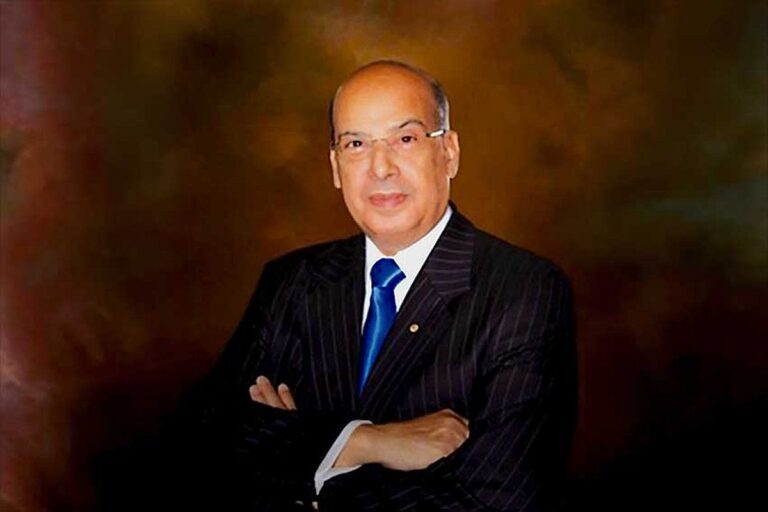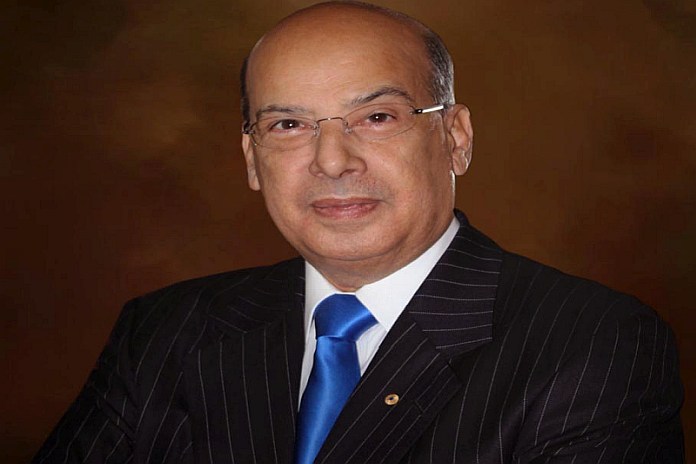

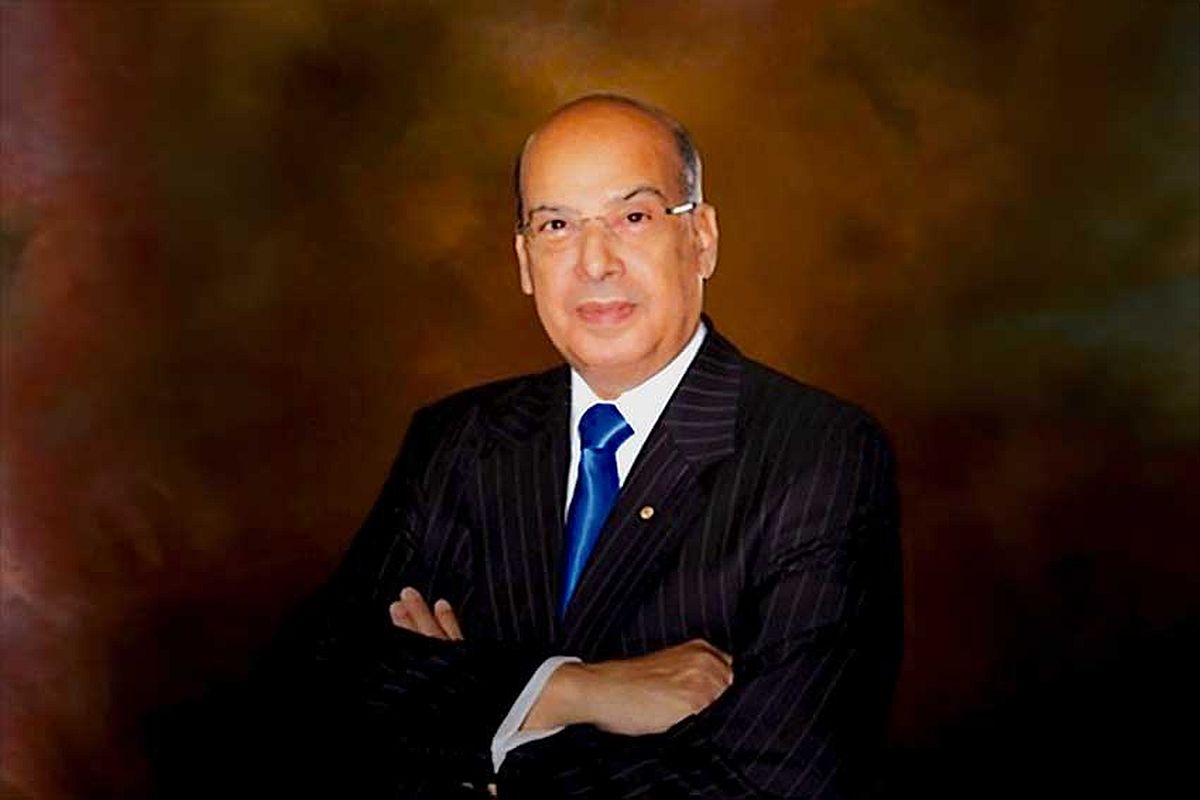
Sir Ronald Sanders is Ambassador of Antigua and Barbuda to the United States and the Organisation of American States. He is also a Senior Fellow at the Institute of Commonwealth Studies at the University of London and at Massey College in the University of Toronto.
By Sir Ronald Sanders
On 19 October, accepting the award of Ukraine’s Order of Merit, I said that my commitment to Ukraine rests on a principle essential to small nations everywhere: sovereignty is the freedom to govern ourselves, preserve our identity and decide our future.
That principle is being severely tested by Russia’s war against Ukraine, with consequences that reach far beyond Europe. The world must not grow accustomed to this war or allow other crises to dim its attention to Ukraine.
The human cost is worsening. The United Nations Human Rights Monitoring Mission in Ukraine verified that at least 328 civilians were killed and 2,105 injured in September 2026. That is 85 percent more civilian casualties than in September 2025. The Mission described the first two weeks of October as among the deadliest periods for civilians in years. On 21 October, Russian attacks in Kyiv and near Kharkiv killed five people and injured at least 23, according to Ukrainian officials cited by the Associated Press.
Renewed attacks on electricity and heating facilities threaten to deepen civilian suffering as winter approaches. Russian attacks on 13–14 October temporarily left 600,000 people in Kyiv without electricity, according to Ukrainian authorities cited by the UN monitoring mission.
Russia is using force to seize another nation’s territory and constrain its future. The question for other nations is whether they will speak against this wrong, remain silent or help enable it. The United Nations Charter is explicit: states must refrain from the threat or use of force against another state’s territorial integrity or political independence.
In 1963, president John F. Kennedy stood in West Berlin, in a city divided by the Berlin Wall, and declared, “Ich bin ein Berliner”, meaning “I am a Berliner”. He was expressing solidarity with people whose freedom was threatened by force.
Can we say, in the same moral sense, “We are Ukrainians”? Not because we claim Ukraine’s history or experience as our own; we cannot. But people who face the threat of losing their homeland, identity or right to self-determination can recognise what Ukrainians are defending. To identify with their struggle is to affirm that their rights matter to us, too.
The international response to Russia’s invasion shows why those rights need defenders. On 25 February 2022, eleven members of the UN Security Council supported a draft resolution condemning Russia’s aggression and demanding an end to its military offensive. Russia vetoed it. Following the Council’s call for an emergency special session, 141 countries voted in the General Assembly on 2 March to reaffirm Ukraine’s sovereignty and territorial integrity and demand Russia’s withdrawal. An overwhelming majority affirmed the rule, but the Assembly could not compel compliance, while Russia’s veto blocked action by the Council.
This is not a reason for smaller states to retreat from defending international law. It is a reason to insist more firmly that it be respected. The prohibition on the use of force is not a privilege reserved for countries with powerful armies, nor a favour that larger states may withdraw. When powerful states disregard it, small and vulnerable states must name the violation and expose the gap between governments’ claims to uphold international law and their actions.
I have consistently argued that the Caribbean should not ignore the crisis caused by Russia’s war against Ukraine. Its effects on food, fuel, transport and prices reach far beyond the battlefield. More fundamentally, weakening the rules against aggression undermines the security of every small state whose sovereignty depends on those rules being respected.
Small states should use their votes in the United Nations General Assembly and regional organisations to affirm Ukraine’s sovereignty and territorial integrity. They should coordinate diplomatic statements, support humanitarian relief, insist on compliance with international humanitarian law and reject any settlement imposed on Ukraine without its consent. They should press for a just and lasting peace that respects Ukraine’s rights and the choices of its people. They must also resist the fatigue that makes aggression seem tolerable simply because it has continued for so long.
On 21 October, president Vladimir Putin met with US envoy Steve Witkoff in St Petersburg. Afterwards, the Kremlin said Putin had agreed in principle to resume trilateral talks with Ukraine and the United States after 10 November. Diplomacy is necessary, but the measure of its success must be a durable settlement that respects Ukraine’s sovereignty and the choices of its people. It cannot turn occupation into entitlement or make coercion the price of peace.
In 2022, I worked with my colleague, ambassador Rita Claverie de Sciolli of Guatemala, to help draft the OAS resolution that suspended Russia’s Permanent Observer status. I have continued to speak for Ukraine’s sovereignty and territorial integrity at the OAS and in my published commentaries because silence would concede that power may override rights. I am proud that the government of my country, Antigua and Barbuda, a small and vulnerable state, has consistently stood up for rights in the face of might.
The people of Ukraine bear the suffering of this war. The principle they are defending belongs to every nation. If a country can be dismembered by force while the world looks away, no small state can be confident that its own independence is secure.
We must not allow Ukraine to become a forgotten war. The defence of another people’s freedom is part of the defence of our own. In that sense, all of us who believe that a nation’s future belongs to its people may say: we are Ukrainians.
About the Author