
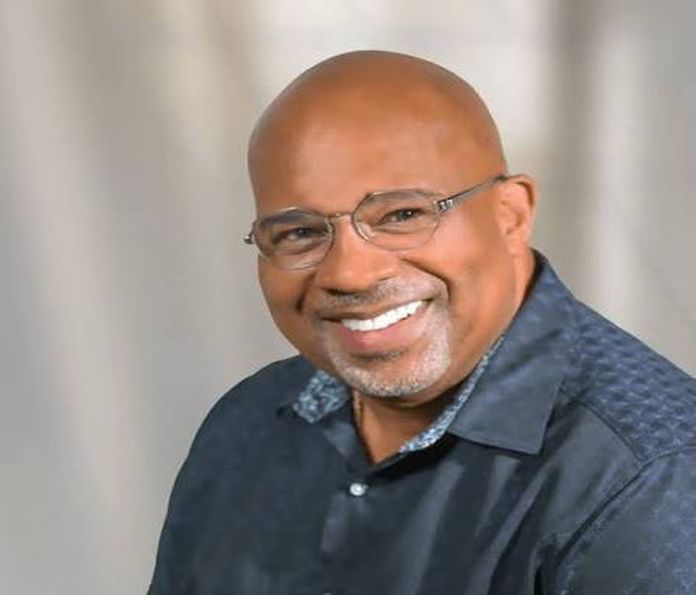
Dr Nicholas Earle Brathwaite
By Lincoln DePradine
In the current debate about artificial intelligence, Grenadian engineer and businessman Dr Nicholas Earle Brathwaite says that while tools like AI and automation are “reshaping every sector of the global economy,’’ how people benefit from the creation and application of technology also must be answered by business executives and leaders of nations.
“We must be precise about what technology is for,’’ Brathwaite told business leaders, entrepreneurs and government officials at a forum in Nigeria. A serious entrepreneur needs to ask, will people’s lives be made better if I build this? Will industries improve if I build this? How do we make it easier for people to access opportunities that will improve their lives and their livelihoods? These are not merely business opportunities; these are nation-building opportunities,’’ Brathwaite said.
Brathwaite, a successful entrepreneur and also Chancellor of McMaster University in Canada, was a featured speaker at “Platform Nigeria,’’ a twice-yearly event hosted on May 1 and October 1, which is Independence Day in Nigeria.
It’s one of Nigeria’s most respected public-affairs stages, and has been running for almost two decades. The theme of the 2026 October edition was “Dream Big, Execute with Knowledge”.
The aim, said Nigerian organisers, was to align “public discourse with national milestones and economic realities,’’ with discussion on topics such as strategic planning and adaptability.
The emphasis, they explained, was on “engaging national transformation by building businesses at scale, focusing on innovation, resilience, execution and scaling.’’
“It is important that all stakeholders in Nigeria start paying more attention to investment in physical capabilities because nation building and national security will depend on the development of physical capabilities. The resilience of Nigerian entrepreneurs is visible everywhere; you guys are incredible,’’ Brathwaite said to applause, on what was his first visit to Nigeria.
The visit, he said, has been a “tremendous ” experience for him and his wife Janice.
“I am truly deeply grateful and honoured to be here and thankful for the opportunity to visit and experience Nigeria for the first time,’’ said Brathwaite, who is a philanthropist, particularly in the cause of youth education and development.
In 2007, Nicholas and Janice Brathwaite established the PETNA Foundation to provide financial support for a range of initiatives in the Caribbean, African and North America.
The initiatives include a scholarship program for young people to study at McMaster University, where Brathwaite earned a degree in Applied Chemistry and Polymer Engineering. He received an honorary doctorate from McMaster in 2018. Brathwaite also holds an M.Sc. from the University of Waterloo.
In his 40-minute presentation to “Platform Nigeria,’’ Brathwaite referenced his professional career as a founding member of nCHIP — a company that specialised in developing an industry-leading, multi-chip module assembly process — to being appointed chief technology officer (CTO) when nCHIP was bought in 1995 by Silicon Valley-based Flextronics.
With the support of an “exceptional team,’’ Flextronics was transformed into a “global enterprise’’, said Brathwaite, and grew approximately 100-fold in 10 years.
Revenue increased from about US$200 million to more than US$30 billion, and Flextronics was listed as number three among the “best managed ” companies in the United States.
“I learnt early that my job as CTO was not to be the smartest technologist in every room. My job was to build an organisation that was capable of recruiting, training, empowering, retaining and developing brilliant engineers, technicians, operators and leaders. That is one of the transitions that every founder and every business leader must eventually make,’’ said Brathwaite, son of former Grenada prime minister, the late Sir Nicholas Brathwaite.
“At the beginning your company may depend on you; but, ultimately, your job is to build an organisation that can solve problems without you.’’
Brathwaite retired from Flextronics to become a founding partner of Riverwood Capital, a private equity firm.
In 2013, he became one of the founders and managing partners of Celesta Capital, a global deep tech venture capital firm.
“One of the convictions that I have carried with me throughout my career is this: being the first is not the accomplishment; it is the opportunity. I did not want that appointment to be merely a personal moment for me to enjoy. I wanted to make sure that I use it to create a path for others,’’ Brathwaite said.
“I also understood something else. If I failed, I could be seen as a mistake never to be repeated. And then the door will be closed to anyone else who looks like me. So, the real test of an opportunity is not whether it changes your life; the real test is what you’re able to build with that opportunity.’’
Brathwaite, offering advice and suggestions to the Nigerian audience, emphasised the importance of building capacity and highlighted the need for scalable businesses to confront the concern of how to “make it easier for people to access opportunities that will improve their lives and their livelihoods.”
Businesses also must address “questions like how do we produce, process, store and move food, with less waste and greater reliability,’’ Brathwaite added.
“How do we move goods from farms and factories to markets and ports predictably, affordably and safely? How do we build health systems that diagnose earlier and deliver care more reliably?’’
Brathwaite encouraged Nigerians to build organisations “capable of solving tough problems.’’
“The organisation you build has to solve problems repeatedly, reliably, and at scale. Scale, therefore, requires a transition from heroics — which is what typically starts a business — to systems,’’ he said. “Heroics can launch a company; but systems are what it takes to enable a company to scale and endure.
Nigerians ought to start applying the innovation that they have shown in the digital world, Brathwaite urged.
“Technology matters and it matters enormously. And this is a very tech-savvy country with a huge competitive advantage globally, where the large majority of your population is 18 years old or younger. That is a huge advantage.’’
Technology software is “important and essential,’’ Brathwaite said. However, “nation building and national prosperity must include a physical dimension,’’ he argued.
“You cannot feed a nation on an app alone; you cannot power a factory with a slogan,’’ said Brathwaite. “You cannot diagnose a patient, move goods to a port, or manufacture essential equipment, using software alone.’’
According to Brathwaite, “Nigerians have grit’’ and their “resilience deserves tremendous admiration.’’
But, as he put it, “grit alone is not enough. Grit may be enough to survive, but grit alone is not enough to scale. A nation will become prosperous not because its people are skilled at overcoming dysfunction. But a nation becomes prosperous when the solutions to dysfunction become repeatable systems, and when those systems raise productivity for everyone.’
Nigeria’s opportunity is to “convert constraints into industries,’’ including examining how “healthcare gaps can become an opportunity to build diagnostics, medical devices, and create local technical capabilities that don’t exist today,’’ Brathwaite suggested.
Nigerian entrepreneurs, he said, “must build with rigour, build with integrity”, and develop businesses “that can be trusted ” and also “build systems that work without them.”
“Start in Nigeria. Start solving Nigerian problems but build with a standard that permits you to serve West Africa, the continent, the diaspora, and global markets. Local relevance should be your starting point. Global dominance should be your objective,’’ Brathwaite said. “And when you build, make sure you build so that it works without you.’’
About the Author