



 WASHINGTON, USA, (PAHO) – The Pan American Health Organization (PAHO) has launched a USD 24 million emergency appeal to support the first six months of the health response and early recovery following the devastating earthquakes that struck Venezuela on 24 June.
The funds will support the delivery of lifesaving health services, restoring essential health care, strengthening disease surveillance and outbreak prevention, ensuring continued access to essential medicines and vaccines, and rebuilding the operational capacity of the health system in the areas hardest hit by the disaster.
The appeal aims to support approximately 700,000 people living in the municipalities most severely affected by the earthquakes, while strengthening referral hospitals and health services serving millions more whose access to care has been disrupted.
“While search and rescue efforts continue, the health emergency is entering a new phase,” said PAHO director Dr Jarbas Barbosa. “Thousands of injured people require ongoing care, hospitals remain under enormous pressure, and the risk of disease outbreaks is increasing. This appeal will help save lives today while supporting the recovery of essential health services for the months ahead.”
On 24 June, two powerful earthquakes measuring magnitude 7.2 and 7.5 struck north-central Venezuela, causing one of the country’s most devastating natural disasters in decades. According to official reports, as of 29 June, more than 1,943 people have died and over 10,500 have been injured. The earthquakes affected densely populated urban areas already facing significant humanitarian challenges, severely damaging health facilities and critical infrastructure, including electricity, water, transport and telecommunications.
Hospitals continue to operate well beyond capacity as they care for large numbers of trauma patients, while shortages of medicines, surgical supplies, laboratory reagents and critical medical equipment threaten the continuity of lifesaving services.
Beyond the immediate injuries, health risks are expected to grow in the coming weeks. Damage to health facilities, population displacement, overcrowded shelters, disruptions to vaccination services, and interruptions to water and sanitation systems increase the likelihood of outbreaks of vaccine-preventable and other communicable diseases, while the psychological impact on affected communities and health workers continues to mount.
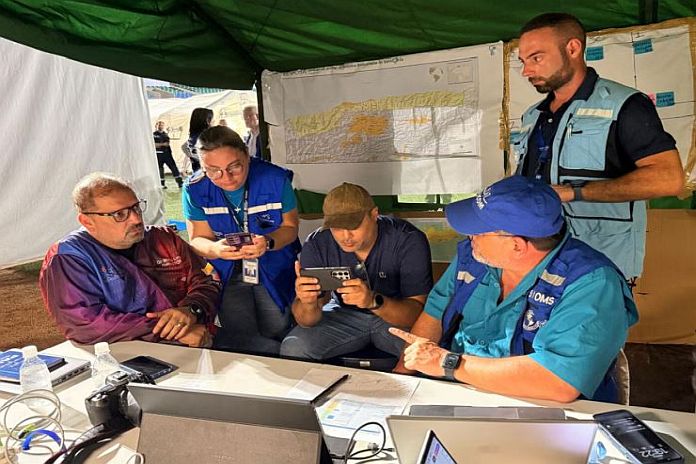
Since the earthquakes, PAHO has been working closely with the ministry of health, civil protection, United Nations partners and health cluster members to coordinate the health response.
The Organization has activated its Incident Management System and Regional Response Team, deployed emergency specialists, carried out rapid assessments of priority hospitals, and coordinated the deployment of international Emergency Medical Teams available to support the response.
PAHO has also mobilized supplies from its Strategic Reserve in Panama, including trauma kits, medicines and emergency equipment, while supporting the urgent procurement of additional vaccines, medicines, laboratory supplies and other critical health commodities.
The appeal will finance six priority areas over the next six months:
- Delivering emergency trauma, surgical and critical care to save lives.
- Restoring the functionality and safety of essential health services.
- Procuring and distributing essential medicines, vaccines, laboratory reagents and medical equipment.
- Preventing disease outbreaks through surveillance, vaccination, laboratory strengthening, infection prevention and control, water and sanitation interventions, and vector control.
- Expanding mental health and psychosocial support and protecting the health and wellbeing of affected communities.
- Strengthening health sector coordination, emergency management and the transition to early recovery.
“Investing in health now will not only help save lives but also prevent secondary public health emergencies that could prolong the humanitarian impact of this disaster,” Dr. Barbosa said. “We call on governments, development partners, international financial institutions, philanthropic organizations and the private sector to support this appeal and stand in solidarity with the people of Venezuela.”