



By Mamta Murthi and Sarvesh Suri
Good health fuels human potential — supporting education, work, and productivity. For people in emerging markets, it is essential to participating in a growing economy. Yet the scale of the global health challenge remains daunting: an estimated 4.5 billion people still lack access to essential health services. Health systems worldwide face worker shortages, weak infrastructure, rising demand, and financial barriers. In these constrained environments, AI offers real promise.
Closing the access gap
The most urgent challenge in global health is access. Even when care is available, fragmented systems often send patients to the wrong level of care. This leads to overcrowded hospitals, unnecessary costs, and avoidable harm.
AI can help. Virtual triage, remote diagnostics, and AI-assisted clinical decision tools can extend health services to underserved populations and guide patients to the right care faster. These technologies can strengthen primary care, improve referrals, and enable disease detection earlier.
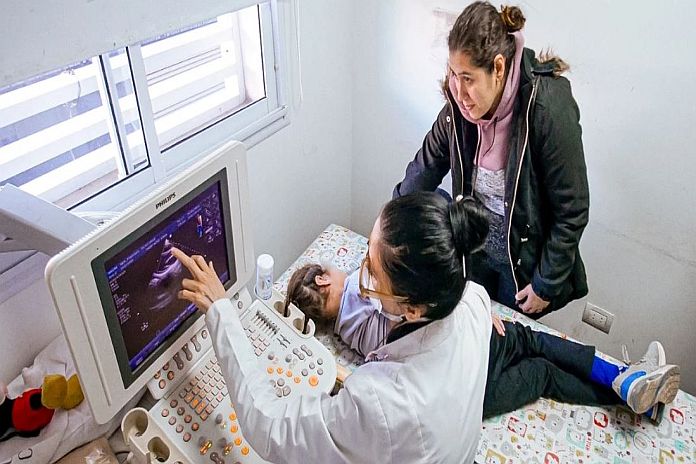
In Brazil, IFC invested in ISA Saúde, a health-tech company that uses AI to flag early signs that a patient’s condition might be deteriorating at home, triggering intervention. In Ethiopia, portable AI-enabled ultrasound devices help rural health workers detect high-risk pregnancies earlier, enabling safer deliveries. In India, AI is expanding early detection and treatment of tuberculosis. These tools are designed to work on basic devices, with limited connectivity, and in local languages — making them practical in low-resource settings. This is what the World Bank Group calls ‘Small AI’: lower-cost tools that deliver impact where large-scale AI infrastructure is not yet feasible.
Augmenting health workers, not replacing them
AI does not replace health workers — it strengthens what they can do. Health care is also one of five sectors where the World Bank Group is focusing on accelerating job creation, along with infrastructure and energy, agribusiness, tourism, and value-added manufacturing.
A strong health sector supports healthy workers and creates jobs in the communities where people live. Nurses, community health workers, and primary care physicians often work without specialist support and under intense resource constraints — and AI is changing that.
AI-powered clinical decision tools can help them make faster, more accurate diagnoses, choose better treatments, and reduce the risk of medical errors. They bring specialist knowledge into settings where it was previously unavailable. But realising these benefits requires significant investment. Health workers need training to use AI tools effectively and to understand both their potential and their limits.
The workforce implications extend beyond hospitals and clinics. AI-enabled health systems depend on a wider ecosystem, including laboratories, data scientists, medical device manufacturers, logistics providers, telehealth platforms, and digital infrastructure specialists. As AI adoption grows, workforce development must keep pace—creating new jobs in diagnostics, digital health, manufacturing, and supply chains. In many countries, these emerging sectors offer significant opportunities, particularly for women and young people.
Confronting real challenges
AI is not a silver bullet. Realising its potential means tackling practical and ethical challenges head-on. Reliable connectivity is not guaranteed. Health data are among the most sensitive forms of personal information, raising serious concerns about privacy, data governance, and cybersecurity.
AI systems trained on unrepresentative data can embed algorithmic bias — and without oversight, that bias can deepen existing health inequities. Regulatory frameworks must keep pace. Governments and health authorities need clear standards for validation, clinical safety, accountability, and transparency.
India as a model
India holds a distinctive position in the global AI landscape. Its digital public infrastructure, large health system, and vibrant technology sector provide a powerful platform for innovation. Nationwide digital identity systems and interoperable health data frameworks have laid the groundwork for scaling digital health solutions.
India’s growing innovation ecosystem is developing tools in telemedicine, diagnostics, genomics, and health analytics. Companies such as Medgenome, an IFC investee and one of India’s leading genomic diagnostics firms, use AI-driven machine learning to identify genetic variants and support more precise diagnosis and treatment.
The path forward
In April 2024, the World Bank Group set an ambitious target: reaching 1.5 billion people with quality, affordable health services by 2030. Achieving this will require public investment, private sector innovation, and responsible deployment of technology.
AI is not a passive tool — it is an active enabler for change. Integrated thoughtfully into health systems, it can expand access, strengthen frontline providers, improve decision-making, and increase efficiency. But technology alone will not determine the outcome. The real promise of AI lies not in algorithms, but in healthier people, stronger systems, and more equitable care. Used deliberately and responsibly, AI can be a force multiplier — helping countries overcome long-standing barriers and bring quality health care to millions more people.