



-
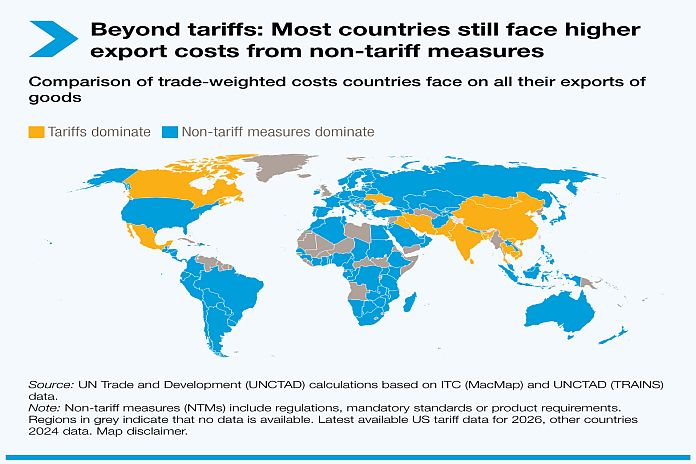
- Non-tariff measures drive trade costs for most countries, exceeding tariffs in 88 percent of cases
- Developing countries face rising tariffs and higher compliance costs at the same time
- Better transparency alone could reduce trade costs linked to these measures by nearly 20 percent
GENEVA, Switzerland – The real cost of trade is shifting: The May edition of the Global Trade Update shows that while tariffs rose sharply in 2025, they have not been the main obstacle to trade over the past decades.
The biggest costs now come from non-tariff measures such as technical regulations, health and safety requirements, and certification procedures. These measures determine who can access markets and under what conditions.
For most countries, these requirements cost more than tariffs.
A growing divide: The burden is not evenly shared. Developing and least developed countries face both higher tariffs and more complex requirements. In some regions, tariffs on exports nearly doubled in 2025. At the same time, compliance with standards has become more demanding and more expensive.
The result is lost trade. Least developed countries forfeit around 10 percent of their exports to G20 markets because they cannot meet these requirements. Smaller exporters are particularly affected. Limited technical capacity and the absence of local testing facilities increase costs and reduce competitiveness.
When rules become barriers: The challenge is not only the measures themselves, but how they are applied. Lack of transparency makes it difficult for firms to identify and comply with requirements. Uncertainty adds delays and costs, especially for smaller businesses.
Improving access to information can make a measurable difference. Better transparency could reduce trade costs linked to these measures by about 19 percent. When requirements are not properly notified, the cost can be equivalent to a 28 percent tariff.
Reducing costs while preserving standards: Non-tariff measures serve legitimate public policy goals. They support safety, health and environmental protection. The objective is not to remove them, but to reduce unnecessary costs.
Greater transparency, stronger regulatory cooperation and targeted support can help exporters meet requirements more efficiently. Aligning or recognising standards across countries can also lower costs, particularly in trade between developing economies.
Without these steps, trade will become more restrictive in practice, even where tariffs remain low.